How to prepare your water heater for Bradenton summer
Bradenton summer puts your water heater through 90-degree garages, hard water, and daily storm outages. Here is the prep list we run on tanks across Manatee County.
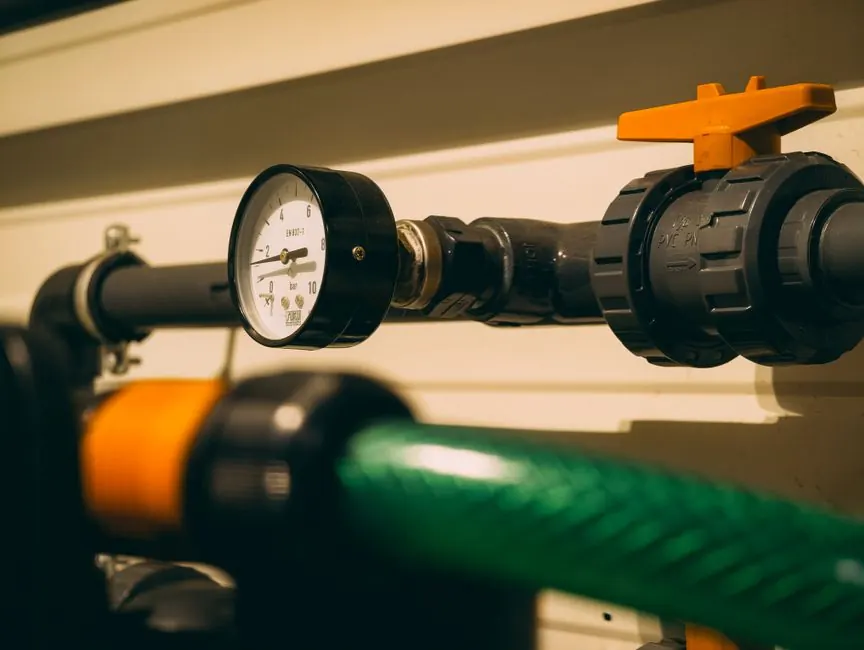
Preparing your water heater for a Bradenton summer means flushing the tank, testing the temperature and pressure relief valve, lowering the thermostat to around 120°F, and checking every fitting for corrosion before the June-through-September heat and afternoon storms hit. Do those four things in May and you avoid most of the mid-July failures we get called out for.
Bradenton is a specific kind of hard on water heaters. Garage temperatures push past 100°F, the water is mineral-heavy, and power flickers during storm season. Below is the exact prep list our technicians run on tanks from Palma Sola to Lakewood Ranch, plus what it costs in 2026 and when it makes more sense to call us than to DIY it.
Why Bradenton summers are hard on water heaters
Bradenton summers stress water heaters through heat, water chemistry, and power quality at the same time, and each one shortens the life of a tank that is already past year eight. A tank sitting in a 105°F garage has to work harder to shed heat, so the burner or element cycles more often and the anode rod depletes faster.
Manatee County water runs hard. Calcium and magnesium settle on the bottom of the tank and on the heating element, and that scale insulates the water from the heat source. You hear it as popping or rumbling. You pay for it as a higher electric bill and a shorter tank life.
Then there is storm season. Between June and November, the grid takes hits, and every outage and brownout puts a small strain on the control board, the thermocouple, or the element. Most of the no-hot-water calls we run in July and August trace back to something that was already weak in May.
If your tank is gas, the story is the same with a different failure point. A gas water heater repair service Bradenton FL call in summer usually means a pilot that will not stay lit, a dirty burner, or a thermocouple that finally gave out after months of short-cycling.
Flush the tank before the heat sets in
Flushing the tank is the single highest-value thing you can do before summer, and it takes about 45 minutes on a standard 40- or 50-gallon tank. You drain the tank, let the sediment run out, and refill. That is it. The difference in recovery time afterward is noticeable.
Here is the sequence we use:
- Shut off the power at the breaker, or set the gas valve to pilot.
- Close the cold-water inlet valve on top of the tank.
- Connect a garden hose to the drain valve at the bottom and run it to a driveway or curb - never into a garage floor drain that backs up.
- Open a hot-water tap upstairs to let air in, then open the drain valve.
- Let it run until the water comes out clear instead of milky or gritty. On a neglected tank, that can take 10 to 15 minutes.
- Close the drain, reopen the cold inlet, and let the tank refill completely before restoring power.
If you have never flushed the tank and it is more than 10 years old, do not do it yourself. Opening the drain valve on a tank full of scale can shear the valve or start a leak at the fitting. That is a job for a technician with a replacement valve in the truck. We handle water heater maintenance Bradenton FL calls all spring for exactly this reason - the flush is cheap, the flood is not.
While the tank is draining, look at the water coming out. Milky or chalky water means heavy scale. Rust-colored water means the tank lining is already failing and you are on borrowed time.
Test the T&P valve and the anode rod
The temperature and pressure relief valve is the safety device that keeps a tank from becoming a projectile, and it should be tested once a year - spring is the right time. Lift the lever halfway for two or three seconds. You should hear water and air discharge through the pipe. If nothing happens, or if it drips after you let go, the valve is stuck or scaled and needs replacing.
A stuck T&P valve is not a small thing. A tank with a failed valve and a stuck thermostat can build pressure until the tank ruptures. That is rare, but it is the reason the valve exists.
The anode rod is the sacrificial metal inside the tank that corrodes so the tank lining does not. In Bradenton's water, a standard magnesium or aluminum rod lasts three to five years. Once it is gone, the tank starts rusting from the inside. If your hot water smells like sulfur or tastes metallic, the anode rod is the first thing to check.
Replacing an anode rod runs $150 to $300 in 2026, depending on tank height and access. Replacing the tank runs $1,200 to $2,400 installed. The math is not close.
Lower the thermostat for summer
Set the thermostat to 120°F for summer in Bradenton, which is hot enough for showers and dishes and cool enough to slow scale buildup and cut standby losses. Every 10°F you drop saves roughly 3% to 5% on water-heating energy, and in a garage that already runs hot, that adds up fast.
Two things to know before you turn the dial:
- Do not go below 120°F. Legionella bacteria can survive in lukewarm tanks, and 120°F is the floor for safety.
- If you have a dishwasher without a built-in heater, keep the tank at 130°F to 140°F so the dishes sanitize properly.
On a gas tank, the dial is on the front of the gas valve. On an electric tank, you have to kill the breaker and pull the access panels - there are usually two thermostats, top and bottom, and both need to be set the same. If you are not comfortable working around 240 volts, leave it. We would rather you call than guess.
If your tank is a tankless unit, summer prep looks different. You still want a descaling flush once a year, and you still want to check the inlet filter. A tankless water heater repair Bradenton FL call in summer usually comes down to scale in the heat exchanger or a flow sensor that has finally clogged.
Check for leaks and corrosion before storm season
Walk around the tank with a flashlight and a dry paper towel. Wipe every fitting - the cold inlet, the hot outlet, the T&P valve, the drain valve, the gas connection. Then wait five minutes and wipe again. Any moisture on the second pass is a leak, even a slow one.
Look for these specific signs:
- White or green crust on the fittings - mineral deposits from a slow drip.
- Rust streaks on the tank body, especially near the top or the bottom seam.
- Water staining on the floor or the drywall behind the tank.
- A bulge or soft spot on the tank shell.
Rust on the tank body itself is the one that ends the conversation. A leaking fitting can be repaired. A rusted tank shell cannot - the tank is failing from the inside, and no amount of tightening will fix it. That is when we start talking about water heater replacement Bradenton FL instead of repair.
If you do find an active leak, shut off the cold inlet and the power or gas, then call. A water heater leak repair service Bradenton FL visit is a lot cheaper than a water-damaged garage floor and a mold remediation bill.
Prep your water heater for hurricane season power loss
Hurricane season in Bradenton runs June 1 through November 30, and the prep for your water heater is mostly about what happens when the power goes out. A gas tank with a standing pilot will keep making hot water during an outage. A gas tank with electronic ignition will not. An electric tank will not either.
Before a storm, do these three things:
- Turn the tank's thermostat to the lowest setting, or to pilot on a gas unit, so it is not trying to fire during a brownout.
- If a storm surge or flooding is possible, shut off the gas or the breaker and the cold inlet valve.
- After the storm, do not restore power until you have confirmed the tank and the area around it are dry.
If your tank sits in a garage that floods - which is common in low-lying parts of the county - a flooded tank is a replace, not a repair. The control board, the insulation, and the burner assembly all take on water, and even if it fires up once, it will fail soon after.
We see this every storm season in the older neighborhoods, especially across Palma Sola water heater repair where garages sit close to grade and drainage backs up fast. Same story in Bayshore Gardens water heater repair - 1950s and 60s construction, tanks in the garage, and a slab that does not drain well.
Common mistakes we see on Bradenton water heaters
The mistakes we see most often on Bradenton water heaters all come down to skipping the boring stuff in spring and paying for it in August. Here is the short list.
- Never flushing the tank. Scale builds for years, then one hot week pushes the element past its limit and it burns out.
- Turning the thermostat up to "get more hot water." If you are running out of hot water, the problem is scale or a failing element, not the setting. Cranking it to 150°F just accelerates the failure.
- Ignoring a slow drip at the T&P valve. That drip is the valve doing its job - pressure is building somewhere it should not.
- Replacing the element without flushing. A new element in a scaled tank fails in months.
- Leaving a tank past 12 years. The average tank life in Florida is 8 to 12 years. Past 12, you are one storm away from a flooded garage.
One more: do not wrap a gas water heater in an insulation blanket unless the manufacturer says it is safe. On gas units, the blanket can block the air intake and the draft hood, which is a carbon monoxide risk. Electric tanks are fine to wrap. Gas tanks usually are not.
When to call a professional
Call a professional when you see rust on the tank body, water pooling under the unit, a T&P valve that will not seal, or a gas smell of any kind. Those are not DIY fixes, and two of them are safety issues.
We also get called for the ones that look small: a pilot that keeps going out, an element that trips the breaker, a tank that runs out of hot water after 10 minutes. Those are usually a $200 to $500 repair if we catch them early, and a $1,500-plus replacement if we do not.
Our team at Bradenton Water Heater Pros handles Water Heater Repair Bradenton FL across the county, from University Park to Samoset, and we carry the common parts on the truck so most repairs are done in one visit. If you are not sure whether your tank is worth fixing, we will tell you straight - repair if it makes sense, replace if it does not.
Frequently Asked Questions
How often should I flush my water heater in Bradenton?
Once a year, ideally in April or May before summer. Bradenton's hard water builds scale faster than most of the country, so annual flushing is the baseline. If your tank is over 10 years old and has never been flushed, have a technician do it - the drain valve can fail.
What temperature should I set my water heater to in summer?
120°F. That is hot enough for showers and laundry, cool enough to slow scale, and it saves 3% to 5% on water-heating energy for every 10°F you drop. Keep it at 130°F to 140°F if your dishwasher has no built-in heater.
Why is my water heater making popping noises?
Sediment on the bottom of the tank. The burner or element heats through the scale layer, and trapped water underneath boils and pops. A flush usually clears it. If the noise continues after a flush, the tank is likely near the end of its life.
Can I flush my own water heater?
Yes, if the tank is under 10 years old and the drain valve turns freely. Budget 45 minutes and a garden hose. If the valve is stiff, the tank is old, or you see rust in the water, stop and call - a sheared valve means a same-day repair or a flooded garage.
Does a water heater need special prep for hurricane season?
Yes. Before a storm, drop the thermostat to its lowest setting or to pilot, and shut off the gas or breaker plus the cold inlet if flooding is possible. After the storm, do not restore power until the tank and the surrounding area are completely dry.
Get help with Water Heater Repair in Bradenton
If your tank is past its prime, leaking, or just not keeping up with a full house in July, we can take a look this week. We handle repair, replacement, and annual maintenance across Bradenton and the surrounding Manatee County neighborhoods.
Call Bradenton Water Heater Pros at +1 (941) 304-0128 and we will get your hot water back on.